


Lunjoe
My Process
Category
Tools
Founding team


*Scenes from Providence RI.

The Problem
Customers often arrive at cafés only to discover that suitable seating is unavailable.
At the same time, café owners struggle to balance customer access with table turnover and capacity management.


Key takeaway
Interview Findings
After interviewing 8 cafe-goers, several themes emerged.
Finding #1:
Seating availability is unpredictable
Users often arrived at cafés only to discover there were no suitable tables available
Finding #2:
Users care about more than having a seat
Factors such as outlets, table size, group seating, and noise levels heavily influenced café selection
Finding #3:
Users Change Their Behavior Around Availability
Many users adjusted their schedules, arrived during off-peak hours, or avoided certain cafés altogether to improve their chances of finding a table.
Survey Validation
To validate interview findings at a broader scale, I surveyed 25 users about their experiences working from cafés.
said they were very likely to work in cafés if they could guarantee a seat.
rated the difficulty of getting a seat as high.
said they often walk out without securing a seat.
When asked to describe the experience in a few words, respondents used terms like:
The research suggested that Lunjoe needed to:
Provide a predictable café experience, with clear visibility into availability and the ability to reserve tables that matched their preferences before arriving.
We realized that this isnt just a problem with customers. Cafe owners were just as frustrated.


These store owner interviews revealed that this wasn't purely a customer problem. The platform would need to create value for both sides, shifting the concept from a reservation tool to a two-sided marketplace.
This changed how we thought about the opportunity.
Rather than designing a reservation tool solely for customers, we needed to create a solution that generated value for both café-goers and café owners. This meant balancing user convenience with operational flexibility.
Need certainty before traveling to cafe
Want visibility into table details (seats availble, outlits, etc)
Want to know estimated table wait time
Need control over table availability
Want effective table turnover
Need simple scehduling tools that fit existing operations
These findings revealed that Lunjoe needed to solve more than table booking. Customers wanted confidence that seating would be available before arriving, while owners needed tools to control availability and turnover.
This led me to explore a two-sided experience consisting of both a customer booking platform and a management dashboard.


Users needed to quickly compare cafes so I explored several approaches for presenting availability, filters, and reservation details.


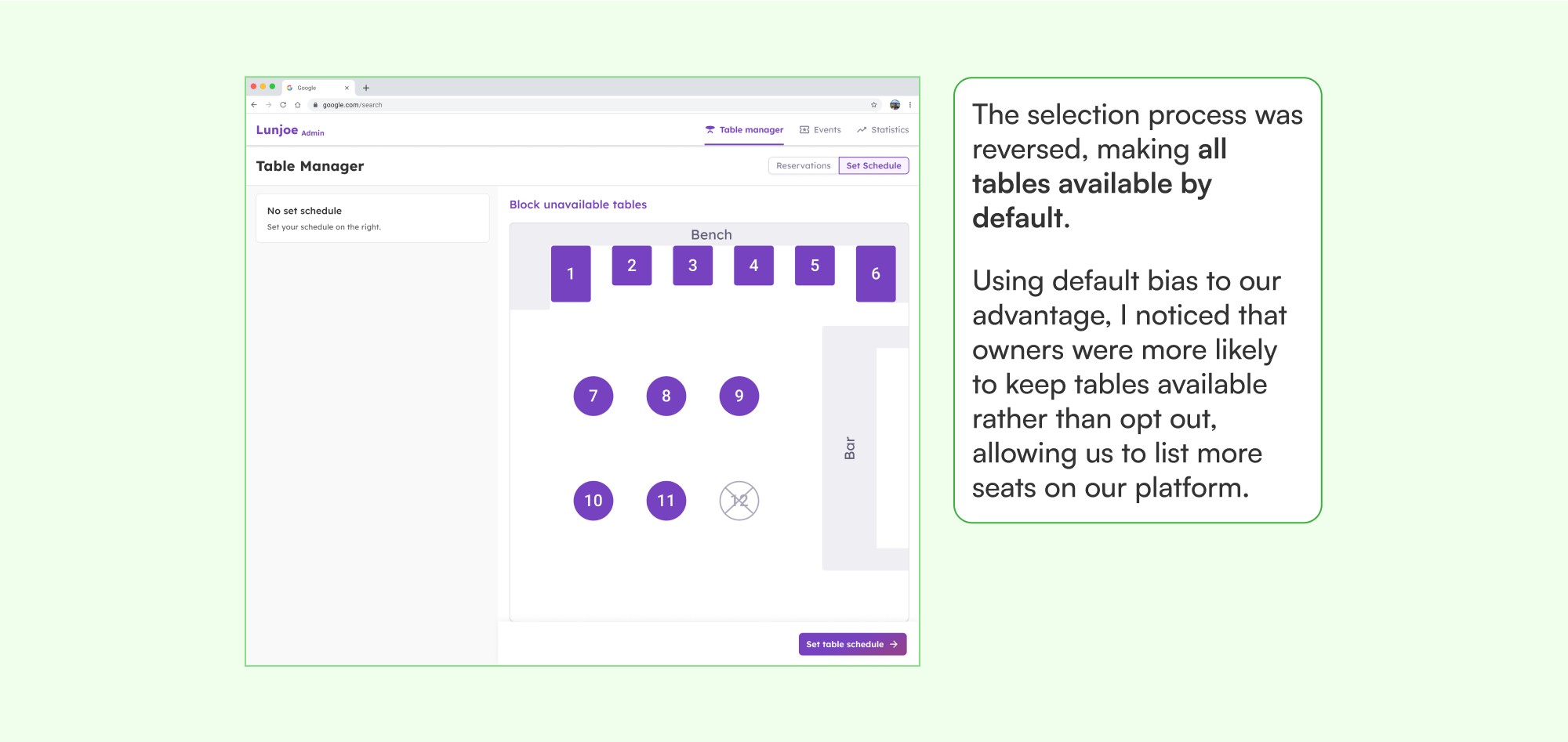
Owner interviews revealed that operational simplicity would be critical to adoption. Rather than introducing a new, complex management system, I used familiar scheduling and reservation management patterns to help café owners quickly learn and adopt the platform.


Feedback: UI design


Feedback: Viewing the cafe
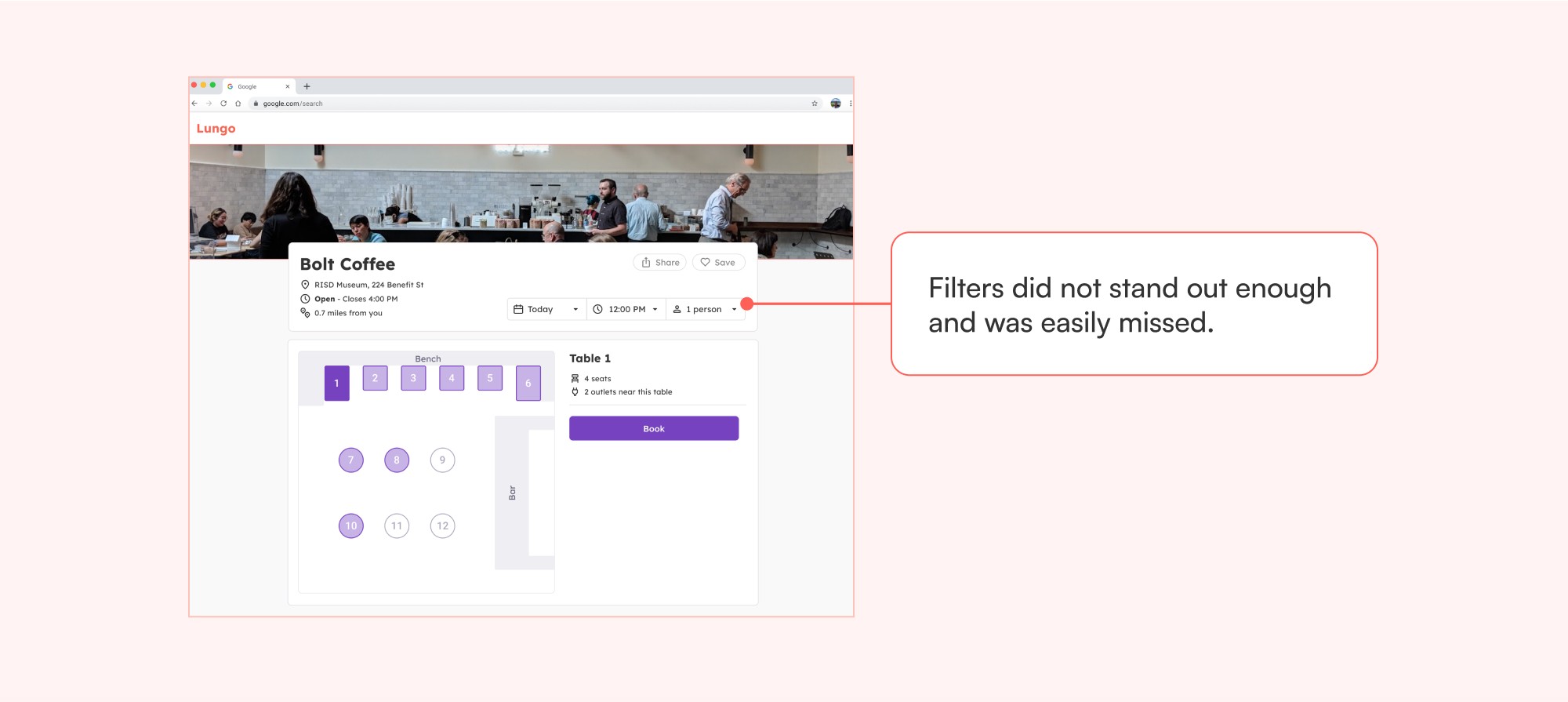

Feedback: Viewing bookings


Feedback: Encouraging store owners to make more tables available

To support Lunjoe's goal of making café reservations feel approachable and reliable, I designed a lightweight visual system centered around warmth, simplicity, and clarity.
The visual language was designed to reflect the welcoming nature of cafés while maintaining the trust and predictability users expect from a reservation platform.

Header 1
Header 2
Body 1
Body 2
Final Design

The mobile experience
Closing thoughts
Designing Beyond the User Experience
The most challenging part of this project was designing for two groups with competing needs. Customers wanted reliable access to seating, while café owners needed greater control over capacity and table turnover.
Balancing these priorities pushed me to think beyond individual screens and consider how product decisions affected both the customer experience and business operations.
